Buying landed property in Singapore starts with one hard truth: it's not just a bigger house. It's a different ownership category with its own rules, its own financing math, and a price range so wide that "landed" alone tells you almost nothing about the number you'll actually pay.
This matters whether you're a family outgrowing a condo, or someone who's built up enough to make the jump. Get the type, the eligibility, or the financing wrong here, and the mistake isn't small. Able, an experienced property agent in Singapore has walked plenty of Singapore families through exactly this decision, and the questions rarely start where people expect.
The 4 Types of Landed Property in Singapore: And What They Cost
Anyone serious about buying landed property in Singapore needs to pick from four real categories first, and the price gap between them is enormous.
| Type | Typical Plot Size | 2026 Price Range |
|---|---|---|
| Terrace house | 150-200 sqm | $2.5M (non-prime) to $6M+ (prime) |
| Semi-detached | 200-400 sqm | $4.5M (fringe) to $9M+ (prime D10) |
| Bungalow (detached) | 400 sqm+ | $8M (non-prime) to $30M+ (D10/D11) |
| Good Class Bungalow (GCB) | 1,400 sqm minimum | $20M, up past $100M in prime addresses |
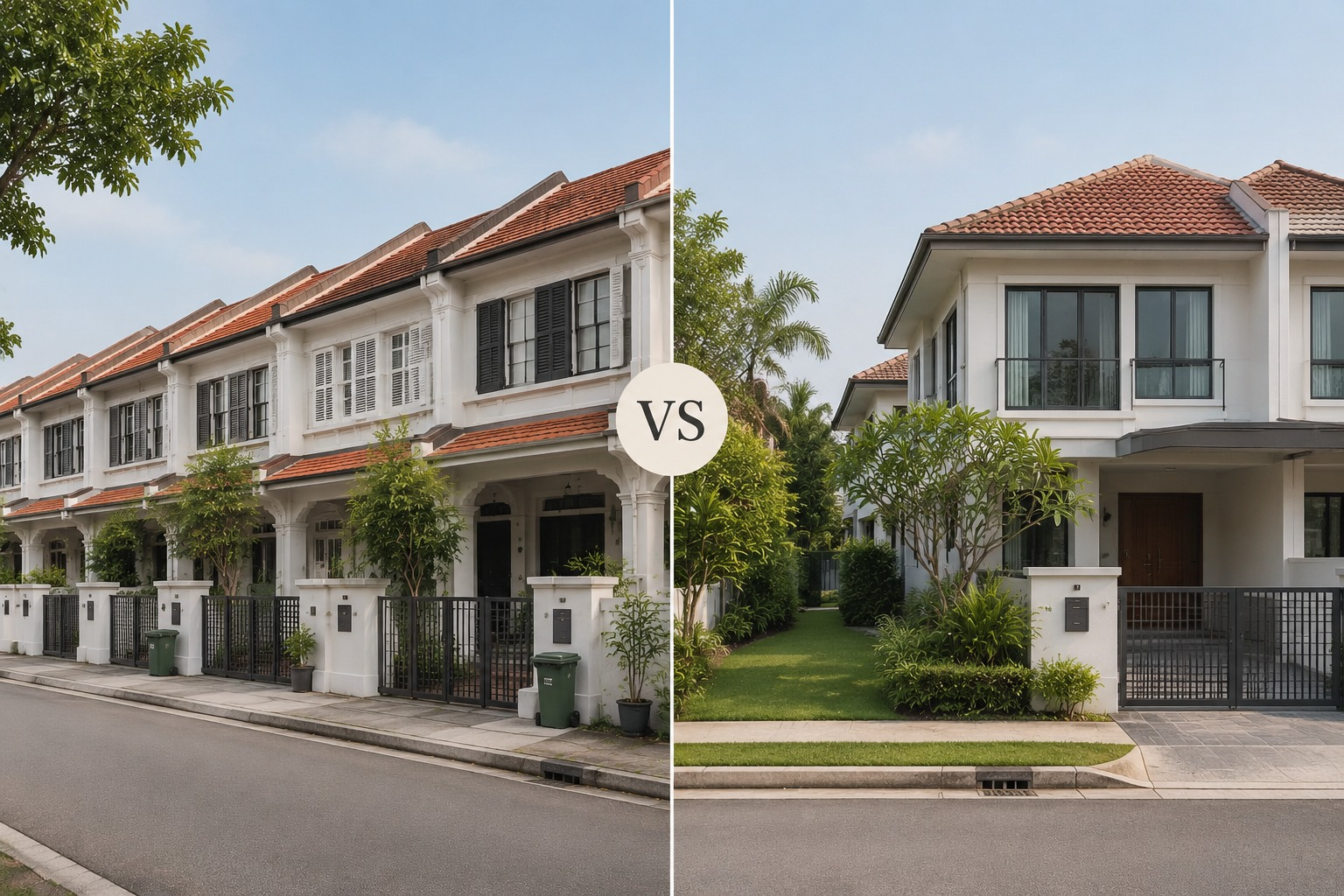
A terrace house shares walls with its neighbours on either side. A semi-detached house shares just one wall, giving you three free sides instead of one. A bungalow stands entirely alone. And a GCB isn't really a property type so much as a status; it needs at least 1,400 sqm of land, sits inside one of only 39 gazetted GCB Areas, and caps site coverage at 40% to keep these estates from ever feeling crowded.
Rebuild Potential: Why Some Buyers Pay More for Less House
Here's something most first-time landed buyers don't think about: you're not just buying the house on the land. You're buying what you're allowed to build there.
Every landed plot has a Gross Plot Ratio (GPR) set by URA, which caps how much floor area you can build relative to your land size. Older landed homes sometimes sit well under their allowable GPR, meaning there's real headroom to extend or rebuild bigger. Others are already maxed out, and what you see is genuinely all you'll ever get without special approval.
Frontage, how wide your plot is at the road, also shapes what you can actually build. A narrow frontage limits your layout options even on a decently sized plot. Before you fall for a specific unit, check the prevailing GPR and frontage against what you actually want to do with the place, especially if rebuilding is part of your long-term plan.
Who Can Actually Buy Landed Property?
Eligibility is the first real filter in buying landed property in Singapore, and it narrows the field fast. Singapore Citizens can buy landed property freely, no approval needed.
Permanent Residents need approval from the Singapore Land Authority before they can buy, and it isn't automatic. Foreigners face the steepest restrictions of all; approval is rare outside Sentosa Cove, and even where it's granted, foreign buyers face significantly higher Additional Buyer's Stamp Duty than citizens do. We've covered the full foreign-buyer picture in more depth in our guide on whether foreigners can buy property in Singapore, if that's relevant to your situation.
Freehold vs Leasehold: Why It Matters More for Landed
Tenure matters more here than it does for condos. A freehold landed property holds its value differently than a 99-year leasehold one, and the gap tends to widen as decades pass and lease decay starts affecting valuation and loan eligibility on the leasehold side.
Most GCBs and prime-district bungalows are freehold, which is part of why they command such a premium. If you're comparing a freehold semi-detached against a leasehold one at a similar price, factor in that the freehold unit will likely hold its resale value more predictably over a 20-30 year horizon.
Where Landed Property Actually Sits in Singapore
Landed housing clusters in specific pockets, not evenly across the island. Bukit Timah, Holland, and the East Coast carry some of the highest concentrations of terrace, semi-detached, and bungalow homes. GCBs specifically sit inside just 39 gazetted areas, with the most prestigious addresses, Nassim, Cluny, and Dalvey, commanding the very top of the price range.
Less than 5% of Singaporeans live in landed property at all, according to recent SingStat figures. That scarcity is exactly why prices sit where they do, and why location within these clusters moves the number so dramatically even within the same property type.
Financing a Landed Purchase
Financing is where buying landed property in Singapore stops feeling like a bigger version of a condo purchase. Banks lend against landed property, but the numbers work differently. Loan-to-Value caps sit at 75% on a first property loan, dropping to 45% on a second, same as private property generally. Total Debt Servicing Ratio applies at the standard 55% ceiling, and there's no MSR to worry about since that only governs HDB and EC loans.
The real difference is the cash outlay. On an $8M bungalow, even a 25% down payment means $2M upfront, plus buyer's stamp duty and legal fees on top. This is exactly the kind of number that catches buyers off guard if they've been anchoring on condo-scale financing math. Able, a landed property agent in Singapore, walks clients through this exact recalibration at Able Sell Property Singapore, since the jump in cash requirement is usually the first real surprise in the process.
ABSD and Other Costs Specific to Landed
Additional Buyer's Stamp Duty follows the same schedule as any other residential property for Singapore Citizens: 0% on a first property, 20% on a second, 30% on a third, per IRAS. On a $10M bungalow bought as a second property, that's a $2M ABSD bill alone, which is why sequencing your purchases and considering asset progression timing matters even more at this price point than it does further down the property ladder.
How Landed Property Holds Value Over Time
Anyone buying landed property in Singapore as a long-term family home should still think about resale, even if selling isn't the immediate plan. Landed property has historically held value well precisely because supply is capped, URA isn't creating new landed land, and the 39 gazetted GCB areas will never expand.
That said, not every landed purchase appreciates the same way. Plot size, freehold status, and proximity to established landed clusters like Bukit Timah or the East Coast tend to drive stronger long-term appreciation than a similarly priced unit in a less established pocket. If resale flexibility matters to you, factor this into your search from the start rather than treating every landed listing as interchangeable once it fits your budget.
Step-by-Step: How to Buy Landed Property in Singapore
Most transactions follow a familiar pattern, but a couple of steps carry more weight than they would on a condo purchase.
- Confirm your eligibility and target property type
- Get an Approval-in-Principle from your bank
- Engage an agent experienced specifically in landed transactions, not just private property generally
- View properties with GPR and frontage in mind, not just the existing layout
- Sign the OTP and pay the option fee
- Lodge a caveat with SLA after exercising the OTP, this isn't automatic for landed the way it functions for condo and HDB transactions, and skipping it leaves your interest in the property unprotected if a competing claim arises
- Pay stamp duties within 14 days
- Complete the purchase
Common Mistakes First-Time Landed Buyers Make
These show up often enough in conversations at Able Sell Property that they're worth flagging before you start viewing:
- Anchoring on condo-scale down payments. The cash gap at landed price points is a different order of magnitude entirely
- Ignoring GPR and frontage. Buying purely on how the house looks today, without checking what you're actually allowed to build
- Assuming all landed property appreciates the same way. Freehold, location, and plot size drive very different appreciation curves
- Skipping the caveat lodgement. A step that's easy to miss and genuinely protects your legal position
- Underestimating GCB exclusivity. Some PR buyers spend months house-hunting in gazetted GCB areas before learning they're simply not eligible, regardless of budget
Why Buyers Work With Able S.K Toh
Landed transactions move differently from condo or HDB deals, fewer comparable transactions, longer negotiation cycles, and buyers who need someone who actually understands rebuild potential, not just square footage. Able is a PropNex Gold Achiever working across HDB, condo, landed, and commercial property across Singapore, and brings that same numbers-first approach to landed enquiries that clients consistently mention in his reviews.
If you're seriously considering buying landed property in Singapore, message Able on WhatsApp for a straight conversation about your specific situation, no pressure.
Get a Free, No-Obligation Valuation
Chat with Able S.K Toh directly on WhatsApp, or call the number below.
Final Thoughts
Buying landed property in Singapore comes down to matching the right type to your budget, understanding what you're actually eligible to buy, and getting the financing and legal steps right before you fall for a specific address. The price gap between a terrace house and a GCB is enormous, and so is the process gap most buyers don't see coming.
Visit ABle Sell Property or reach out to Able directly before you commit, landed property rewards buyers who understood the details early, not the ones who found out after signing.
FAQs
How much does landed property cost in Singapore?
Terrace houses start around $2.5M in non-prime areas. Semi-detached homes range from $4.5M to $9M+. Bungalows run $8M to $30M+, and GCBs start near $20M, exceeding $100M in prime addresses.
Can foreigners buy landed property in Singapore?
Only with SLA approval, which is rarely granted outside Sentosa Cove, and foreign buyers face significantly higher ABSD than citizens.
What's the difference between a bungalow and a Good Class Bungalow?
A standard bungalow needs at least 400 sqm of land. A GCB requires a minimum 1,400 sqm plot inside one of 39 gazetted GCB Areas, and is reserved exclusively for Singapore Citizens.
Can Permanent Residents buy landed property in Singapore?
Yes, but only with prior approval from the Singapore Land Authority. GCBs remain off-limits to PRs entirely.
Is freehold or leasehold better for landed property?
Freehold typically holds value more predictably over the long term, especially past the 20-30 year mark, though leasehold options are usually more affordable upfront.
What is Gross Plot Ratio and why does it matter for landed property?
GPR caps how much floor area you can build relative to your land size. Checking it before you buy tells you the real rebuild or extension potential of a property.
Do I need to lodge a caveat when buying landed property?
It's not mandatory the way it functions for condo or HDB purchases, but lodging one after exercising your OTP protects your legal interest in the property.