Is property investment in Singapore still worth it in 2026? Short answer: yes, but only if you look past the price tag. Rent, taxes, and how long you plan to hold matter just as much as the number on the listing, and most of the guides out there skip straight past that part.
This matters whether you're buying your first rental unit or your third. Get the yield math wrong, or miss what ABSD actually does to your return, and the mistake costs real money, not just a bad decision on paper. That's exactly where an experienced property agent in Singapore like Able earns their fee, walking through your specific numbers before you commit, not after.
Singapore Property Market in 2026: What's Actually Happening
Private home prices rose 0.9% in Q1 2026, the sixth straight quarter of growth. The Outside Central Region led that growth at 2.2%, outpacing pricier central districts. Meanwhile, HDB resale prices dipped 0.1% in the same quarter, the first drop since 2019.
So the two markets are moving in different directions right now. Private property is holding firm on thinner trading volume. HDB is cooling slightly after years of gains. Mortgage rates have also eased a lot. Fixed home loan packages now sit around 1.4% to 1.8% a year, down from close to 3% in 2023. Cheaper financing changes the return math on almost every property you'd consider buying.
Executive Condominiums are worth watching too. Developers sold 1,168 EC units in Q1 2026, up over 40% year-on-year and the strongest quarterly EC volume in more than eight years. That's a real signal of upgrader demand feeding into the private market, which matters if you're thinking about timing an entry or exit around broader buyer sentiment. It is the same demand covered in Able's HDB to condo upgrade guidance.
Is Property Investment in Singapore Still Worth It?
Singapore has small land, strong government stability, and steady demand from both locals and expats. That's the case for property here that hasn't really changed in decades.
But "worth it" depends on your numbers, not the general story. A property that looks great on paper can still lose you money after tax, vacancy, and holding costs eat into the return. The sections below give you the actual math, not just the pitch: the same math a good property investment agent in Singapore should be walking you through before you sign anything.
Understanding Rental Yield: Gross vs Net
Gross yield is annual rent divided by purchase price. Net yield subtracts your real costs first: maintenance, property tax, agent commission, before dividing.
Example: A $1,000,000 condo renting for $3,500 a month gives you $42,000 a year in rent. Gross yield: 4.2%. Now subtract $10,800 in property tax, $4,000 in maintenance fees, and $1,000 in agent commission. Net income drops to $26,200, which brings your net yield down to 2.6%.
That 1.6-point gap between gross and net is exactly where a lot of first-time investors get surprised.
OCR vs CCR matters too. Outside Central Region units usually post higher gross yields since prices sit lower relative to rent. Core Central Region units often show lower yields but attract steadier expat tenant demand, which means fewer vacancy gaps between tenants.
The Real Tax Picture: ABSD, Property Tax, and No Capital Gains Tax
Taxes make or break your actual return, not the purchase price alone. Here's the full picture: what you'll pay upfront, what you'll pay every year, and the one Singapore advantage most investors don't fully appreciate.
Additional Buyer's Stamp Duty (ABSD) is the single biggest cost most investors face upfront. A Singapore Citizen pays 0% on a first property, 20% on a second, and 30% on a third. Permanent Residents pay 5%, 30%, and 35%. Foreigners pay a flat 60% regardless of how many properties they already own.
Non-owner-occupied property tax: applies if you're renting the unit out rather than living in it. This runs progressively from 12% up to 36% of Annual Value, a real recurring cost most rental yield calculators skip entirely.
Here's the part most guides bury: Singapore has no capital gains tax. If you buy and hold genuinely as a long-term investment, profit from the eventual sale isn't taxed at all. This is a real, structural advantage over markets like the UK, Australia, or the US, where a chunk of your gain goes straight to the taxman.
One caveat: if IRAS decides your activity looks more like trading than investing, frequent buying and selling in short windows, your gains can be reclassified as taxable income instead. Genuine long-term holding is what protects the zero-tax treatment.
Selling Early? What SSD Costs You
If your plans change and you need to sell within a few years, Seller's Stamp Duty applies on a sliding scale: 16% in year one, 12% in year two, 8% in year three, 4% in year four, and nothing after that.
Example: sell a $1,200,000 condo in year two, and SSD alone costs $144,000. This is exactly why an exit plan matters before you buy, not after: you need a realistic sense of your minimum holding period going in. If selling is already on your mind, start with Able's property selling process.
Financing an Investment Property
Loan-to-Value limits drop once a property isn't your first. A first property loan can go up to 75% LTV. A second property loan drops to 45% LTV, meaning you need a much bigger cash and CPF down payment the second time around.
Total Debt Servicing Ratio caps your borrowing at 55% of gross income across all your debts combined. Private property loans aren't subject to MSR, the tighter 30% ceiling that governs HDB loans only. With current fixed rates around 1.4% to 1.8%, financing costs are meaningfully lower than they were even a year ago, worth running your numbers again if you looked at this a while back and walked away.
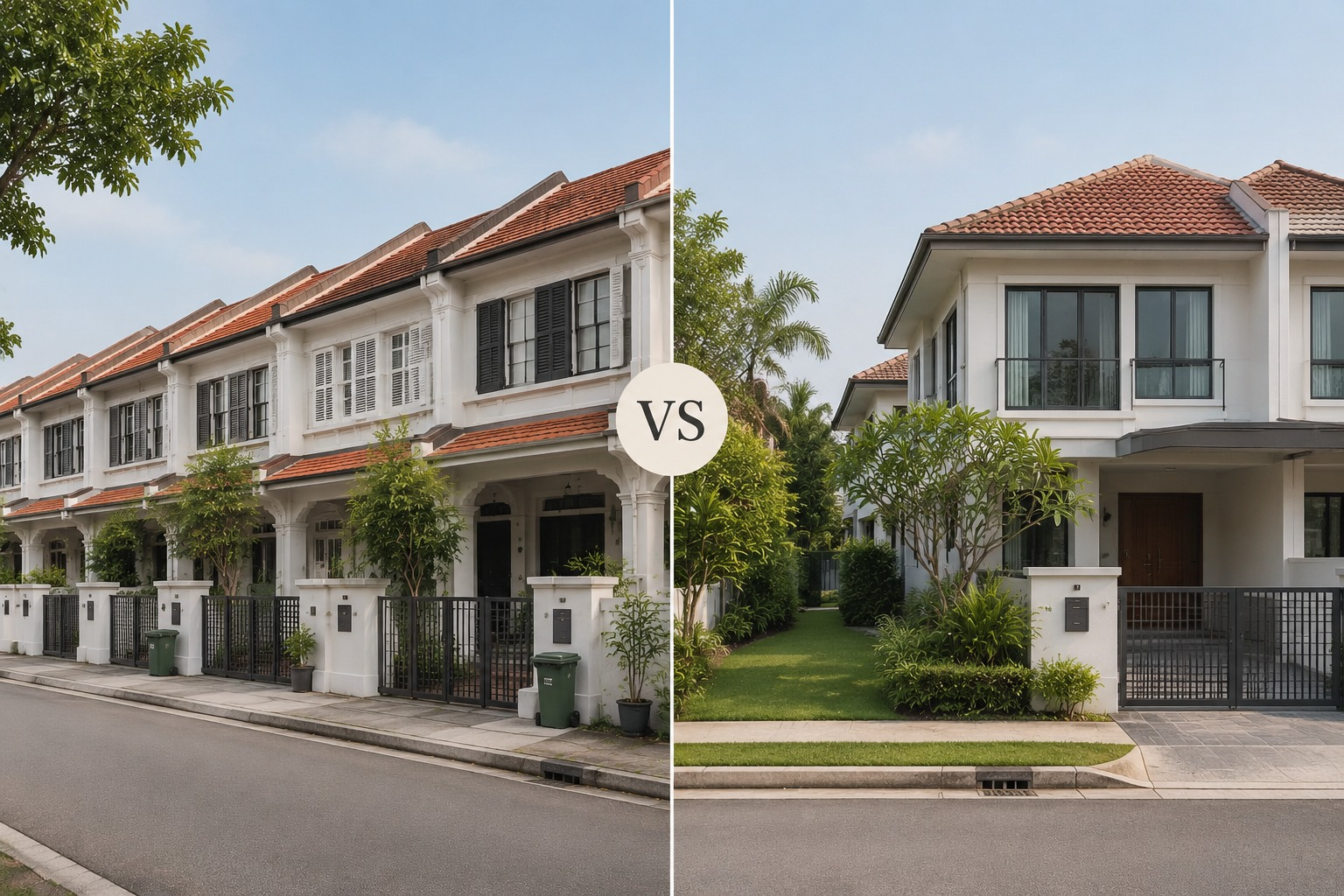
HDB vs Condo vs Commercial: Which Investment Fits You?
| HDB (after MOP) | Condo | Commercial | |
|---|---|---|---|
| Typical gross yield | 3-4% | 2.5-4.5% | 4-7% |
| ABSD exposure | Standard schedule | Standard schedule | None |
| CPF usage | Yes | Yes | No |
| Tenant pool | Smaller, income-capped | Broad, including expats | Businesses only |
| Liquidity on exit | Moderate | High | Lower, longer sales cycle |
Commercial property skips ABSD entirely, which is why some investors shift there once residential ABSD gets expensive on a second or third purchase. HDB rental income is capped by subletting rules and a smaller eligible tenant pool, while condo units stay the most liquid on exit.
The Asset Progression Strategy
A common path: buy an HDB flat, wait out the 5-year Minimum Occupation Period, then either sell it or keep it as a rental while using fresh loan capacity to buy a condo.
The timing detail that trips people up: clear your outstanding HDB mortgage before your second purchase, or you'll trigger the lower 45% LTV limit on the new loan instead of the 75% first-property rate. Sequencing this correctly can mean tens of thousands of dollars in extra financing capacity.
Common Mistakes First-Time Investors Make
Every one of these mistakes is avoidable, and every one of them shows up in real transactions. Here's what actually trips people up.
- Chasing gross yield only. A high headline yield can turn mediocre once tax, maintenance, and vacancy are netted out
- Ignoring non-owner-occupied property tax. This recurring cost is easy to forget when you're focused on the purchase price
- No exit plan. Assuming you'll hold "forever" without checking your SSD exposure if plans change
- Underestimating vacancy risk. Even strong locations have gaps between tenants, so budget for at least one to two months of vacancy a year
- Buying based on show flat marketing. Comparable transaction data tells you more than a sales gallery ever will
- Skipping the second-property LTV check. Assuming your financing capacity stays the same as your first purchase, when it actually drops from 75% to 45%
Expert Tips Before You Invest
None of this is complicated once you know it. Most of it just never gets said out loud until after someone's already signed.
- Run your numbers on net yield, not gross, before you commit to any unit
- Check the LTV drop on a second property before you assume your financing capacity
- If you're holding long-term, Singapore's zero capital gains tax is a genuine edge, so don't erode it by flipping too fast and risking IRAS reclassification
- Compare OCR and CCR trade-offs based on your actual goal: higher yield or steadier tenant demand
- Get your numbers checked by someone who's walked through this exact math with other clients, not just a generic online calculator
Get these right before you view a single unit, and the rest of the process gets a lot easier to navigate. Able's buying process walks through the same checks step by step.
Why Investors Work With Able S.K Toh
Able is a PropNex Gold Achiever working across HDB, condo, landed, and commercial property in Singapore. Clients consistently mention the same thing across his reviews: he explains the real numbers clearly, rather than pushing a decision based on headline yield alone.
If you're weighing a property investment in Singapore, message Able on WhatsApp for a straight conversation about your specific numbers, no pressure.
Get a Free, No-Obligation Valuation
Chat with Able S.K Toh directly on WhatsApp, or call the number below.
Final Thoughts
Property investment in Singapore still makes sense for a lot of people in 2026: steady demand, easing mortgage rates, and no capital gains tax on genuine long-term holds. But the return only works if you've actually run your numbers past the purchase price, into ABSD, property tax, and a realistic exit plan.
Visit Able Sell Property or reach out to Able directly before you commit, especially if your situation involves a second property, a foreign purchase, or a tight exit timeline.
FAQs
1. Is property investment in Singapore still profitable in 2026?
Yes, for many buyers, especially with mortgage rates easing to around 1.4-1.8%. Profitability depends on net yield after tax and costs, not just the headline rent number.
2. What is a good rental yield in Singapore?
Gross yields of 3-4% are typical for condos, with OCR units often higher and CCR units lower but steadier. Net yield after costs usually runs 1-2 points lower than gross.
3. Do I pay capital gains tax on property in Singapore?
No. Singapore has no capital gains tax on property held as a genuine long-term investment. Frequent flipping can be reclassified as taxable trading income by IRAS.
4. How much ABSD do I pay on an investment property?
Singapore Citizens pay 20% on a second property and 30% on a third. PRs pay 30% and 35%. Foreigners pay a flat 60% regardless of property count.
5. What's the difference between gross and net rental yield?
Gross yield is annual rent divided by price. Net yield subtracts property tax, maintenance, and agent commission first, giving a more accurate picture of actual return.
6. Can foreigners invest in Singapore property?
Yes, mainly through private condominiums. Foreigners pay 60% ABSD unless exempt under a Free Trade Agreement, and cannot use CPF to finance the purchase.
7. Is HDB or condo better for rental investment?
Condos generally offer a broader tenant pool including expats and higher liquidity on exit. HDB has a smaller eligible tenant pool but lower entry prices.
8. What's the LTV limit for a second property in Singapore?
75% on a first property loan, dropping to 45% on a second, which significantly increases your required cash and CPF down payment.
9. How does non-owner-occupied property tax work?
It applies progressively from 12% to 36% of Annual Value on rented-out units, a recurring annual cost separate from ABSD and income tax on rental earnings.
10. What are common mistakes first-time property investors make?
Chasing gross yield without netting out costs, ignoring property tax on rentals, having no exit plan, and underestimating vacancy periods between tenants.